


Morpheus
-
Posts
641 -
Joined
-
Last visited
-
Days Won
101
Content Type
Profiles
Forums
Downloads
Tutorials
Posts posted by Morpheus
-
-
You failed to follow the tutorial and made this an install that cannot be supported. Go back and start over following the tutorial and this will work so much better.
-
You will need to supply more information and what exactly is not working?
-
Following requests for enhanced event management, the DB-Maintenance Utility has been updated to include a time-based purge feature. Administrators can now automatically clear database events older than (X) days.
Happy WinSnorting...
-
This is the execution log output for the Automated Installation Framework of a WinSnort Windows Intrusion Detection System (WinIDS) configured as a remote node sensor. The deployment process is virtually identical for Windows Workstation or Windows Server environments.
-
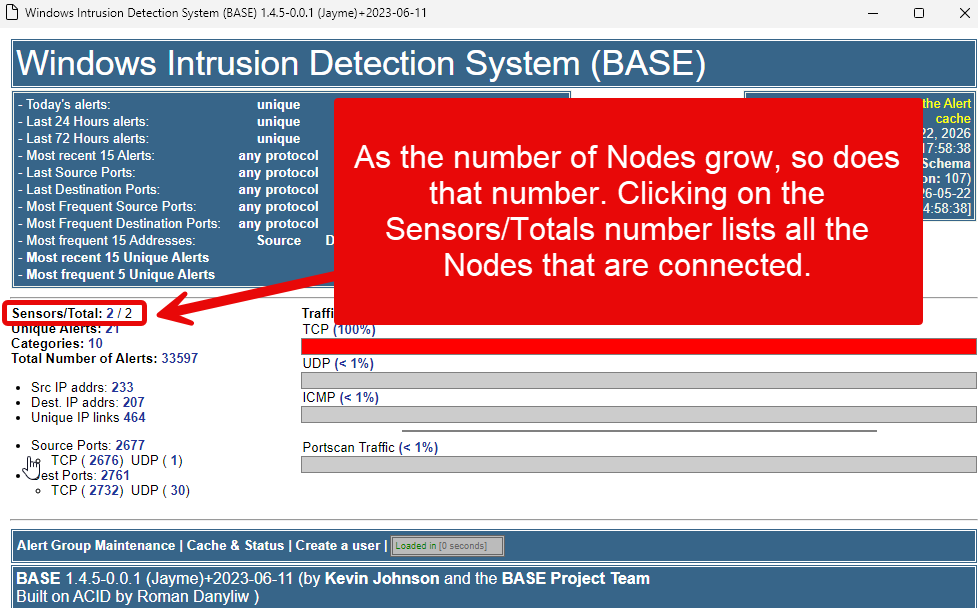
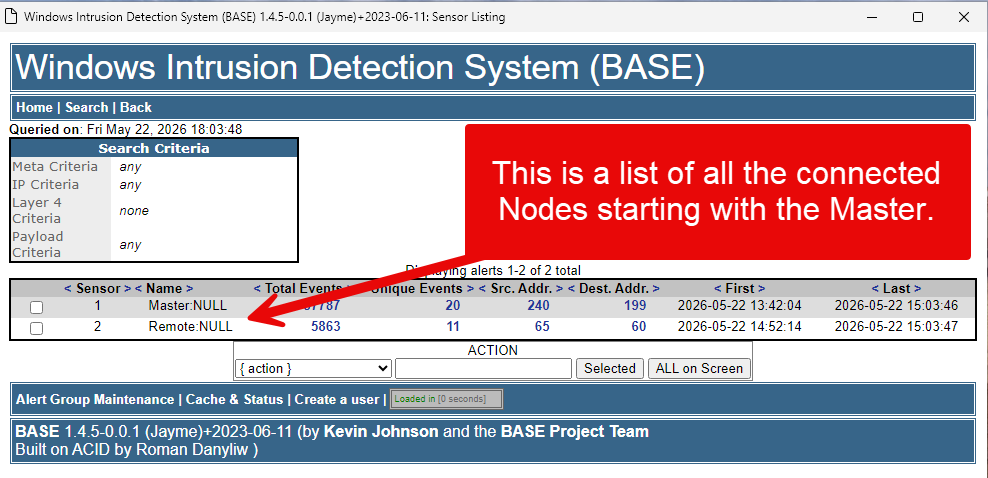
Opening the Master sensor will display the total number of connected nodes. If a node is missing, it simply means it hasn’t connected yet—this process can take a few minutes.
(Note: MySQL handles this initial connection noticeably faster than PostgreSQL.)
-
This is the execution log output for the Automated Installation Framework of a WinSnort Windows Intrusion Detection System (WinIDS) configured as a Master/Standalone sensor. The deployment process is virtually identical for Windows Workstation or Windows Server environments, with the exception that Server architecture requires a distinct Internet Information Services (IIS) feature provisioning step.
-
This is the execution log output for the Automated Installation Framework of a WinSnort Windows Intrusion Detection System (WinIDS) configured as a Master/Standalone sensor. The deployment process is virtually identical for Windows Workstation or Windows Server environments, with the exception that Server architecture requires a distinct Internet Information Services (IIS) feature provisioning step.
-
This is the execution log output for the Automated Installation Framework of a WinSnort Windows Intrusion Detection System (WinIDS) configured as a Master/Standalone sensor. The deployment process is virtually identical for Windows Workstation or Windows Server environments, with the exception that Server architecture requires a distinct Internet Information Services (IIS) feature provisioning step.
-
This is the execution log output for the Automated Installation Framework of a WinSnort Windows Intrusion Detection System (WinIDS) configured as a Master/Standalone sensor. The deployment process is virtually identical for Windows Workstation or Windows Server environments, with the exception that Server architecture requires a distinct Internet Information Services (IIS) feature provisioning step.
-
WinSnort.com is a premier resource dedicated to the advancement of network security through the WinIDS (Windows Intrusion Detection System) stack. Our mission is to provide the security community with the tools, documentation, and automation necessary to deploy professional-grade intrusion detection and prevention systems on Windows platforms.
At the core of our platform is the WinIDS Automated Deployment Framework, a comprehensive suite designed to streamline the installation and configuration of industry-standard security tools. We focus on the seamless integration of:
-
Snort: The world's most widely deployed IDS/IPS engine.
-
Barnyard2: For efficient spooling and processing of security event data.
-
Database Integration: Optimized configurations for MySQL and PostgreSQL backends.
-
PulledPork: Automated rule management and synchronization.
-
Web Consoles: Professional deployment of Apache2 and IIS environments for real-time monitoring.
Our Mission
We believe in empowering security administrators and researchers with automated, reliable, and high-performance security solutions. By moving away from complex manual setups, WinSnort allows users to focus on what matters most: identifying threats and securing their network infrastructure.
The WinIDS Framework
Our latest project, WinIDS v4.1, represents a ground-up rewrite of our deployment scripts, utilizing PowerShell and advanced automation to ensure a "plug-and-play" experience for complex security environments. From local sensor management to remote node initialization, we provide the technical blueprints for a robust defense-in-depth strategy.
Community & Innovation
Beyond software, WinSnort.com serves as a hub for tutorials, technical documentation, and community support. Whether you are a seasoned systems administrator or a security enthusiast, our resources are crafted to help you master the intricacies of the Snort ecosystem.
-
-
We are pleased to provide updated guidance on utilizing the PulledPork rule updater for your Windows Intrusion Detection systems. Whether you are managing a standalone sensor or a fleet of remote nodes, following these best practices will help ensure your detection rules remain current and reliable.
Deployment Scenarios
Standalone Sensors
For standalone installations, the updater can be executed directly from the desktop shortcut.
-
Note: While the script may function without elevated permissions, we recommend selecting Run as Administrator to ensure the utility has the necessary access to update system files successfully.
Remotely Managed Nodes
While the updater is fully compatible with standalone sensors, it is optimized for remotely managed environments. For these deployments, we recommend enabling all three configuration options (Silent Mode, Email Notifications, and Task Scheduling) to ensure seamless, automated maintenance.
Recommended Configurations
You can optimize the script by adjusting the following variables within the configuration file:
-
Silent Mode (
$silent): Set to1to mute console output. This reduces overhead and is recommended for remote, automated nodes. -
Email Notifications (
$sendmail): Set to1to receive status alerts, requires SMTP setting added.-
Failsafe Mechanism: If an update fails, the script will automatically roll back to the previous stable ruleset and send a notification detailing the cause of the failure.
-
-
Scheduling: For instructions on automating your update cycles, please refer to our dedicated tutorial: Scheduling and Updating Windows IDS Rules.
Feedback & Continuous Improvement
Several fail-safes have been built-in; the process is constantly looking to improve the stability and performance.
We welcome your input! If you have any recommendations or encounter issues, please submit your feedback.
-
-
The WinIDS installation includes a Rules Updater utility (located in the WinSnort group in the Start Menu). By default, this utility performs a standard rule sync with Sourcefire and applies updates automatically.
For administrators who require remote monitoring, the utility includes an optional Email Utility. When activated, it sends a status report to a designated email address, confirming whether rules were updated, already current, or if a validation error occurred.
Configuration Procedure
To activate and configure the email notification system, follow these steps:
1. Open the Script for Editing
Navigate to your WinIDS installation directory and locate the PowerShell script:
- Path: \scripts\rules-update.ps1
- Action: Right-click the file and select Edit (or open it with Notepad/VS Code).
2. Enable the Mail Utility
Locate the User Configuration section at the top of the script. Change the $sendmail value from 0 to 1:
$sendmail = 1 # Activates the email reporting feature
3. Configure SMTP Settings
Input your mail server details between the quotes in the configuration block:
- $smtpServer: Your mail server address (e.g., smtp.gmail.com or internal relay IP).
- $smtpPort: Use 587 for SSL/TLS or 25 for standard internal relays.
- $smtpUser / $smtpPassword: Enter valid credentials if your server requires authentication.
- $from / $to: Enter the sender and recipient email addresses.
4. Save and Test
- Save the file.
- Open the Start Menu and navigate to the WinSnort group.
- Click the Rules Updater link to execute the script.
- Observe the console output. If successful, you will see:
An Email report of the Rules update has been sent...
Troubleshooting & Support
- Execution Policy: Ensure the script is run with Administrative privileges.
- Port Blocking: If using Port 25, ensure your antivirus or firewall is not blocking outbound SMTP traffic from PowerShell.
- Logs: Check the \pulledpork\log\ folder for detailed execution logs if an update fails.
Technical Support:
Issues during setup, please visit the WinSnort.com Forums under the Auto-Installer section for community-led support and troubleshooting tips.
-
If the High-Volume Logging/Testing option was enabled during the initial Auto-Installer setup, the system likely generated a significant number of events.
While this setting is an excellent diagnostic tool to verify that the Windows Intrusion Detection System (WinIDS) is actively receiving data—especially in environments where default traffic might take hours to trigger an alert—it is recommended to revert to the default policy once connectivity is confirmed.
Procedure to Restore Default Rule Policy
Follow these steps to deactivate the testing rules and return to the standard configuration:
-
Modify Configuration:
-
Navigate to the
Pulledpork\etcfolder via File Explorer. -
Right-click
enablesid.confand open it with Notepad. -
Locate the line beginning with
pcre:. -
Comment out the line by adding a
#at the start (e.g.,# pcre:.) -
Save and exit.
-
-
Clear Temporary Files:
-
Navigate to the
Pulledpork\tempfolder. -
Delete the two files located in this directory.
-
Close File Explorer.
-
-
Update Rule Set:
-
Open the Start Menu and locate and open the WinSnort folder.
-
Run the Rules Updater.
-
This process will fetch the latest rule definitions and reconfigure Snort to the default policy setting, ensuring optimal performance and manageable log volumes.
-
-
You will need to bridge the two NIC's and in Windows 10 do it as below:
Bridging Your Internet Connections on Windows 10
Step 1: Go to your Control Panel from the Start menu.
Step 2: Navigate to Network Connections.
Step 3: Click on the first NIC that you want to bridge.
Step 4: Hold down the CTRL key while clicking on the second NIC that you want to bridge.
Step 5: Right-click on one of the selected NICs and click "Bridge Connections."
I have not tested the above on anything other than Windows 10.
-
To test the MySQL database server and authentications open a CMD window with Administrator access and type d:\activators\db_tools\test_mysql-php7.php
-
The problem is that it is not finding the base.php file, or possibly the base_conf.php file? It has to find the file first before trying to execute it.
Not sure if it could be the problem but make sure the config file is correctly named: base_conf.php
Maybe some sort of a permission problem with the files in the base folder?
Not sure how a permission problem could be the problem when the test.php file is working.
You are going to have issues with WinPcap and Npcap both installed. Use either one but not both.
Note: Uninstall both and then install the one you are going to use. Make sure Snort is not running when you uninstall.
-
Does this work: http://winids/base.php
-
I'm not sur but there appears to be a formatting error with the Apache config. Try the attached one.
Also try moving the test.php file to the base folder and then try http://winids/test.php
-
On 11/25/2019 at 5:22 PM, 7rrivera7 said:
It turned out to be permissions to test.php. I had to grant permission to the DefaultAppPool from the top of the INETPUB folder
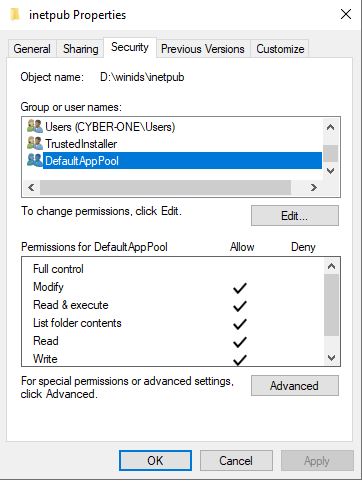
That is not normal?
-
The only thing I can tell is that it's not allowing you to access the test.php because you don't have sufficient permissions?
What happens if you remove the test.php file and try accessing it when it is missing. You should get the same error?
Do you have a space in the word base?
Look at your Physical Path - It appears you have a space in base -> ba se
-
All the files look good. Attached id my config for IIS, try it. You will need to stop IIS, replace the file, and then restart IIS.
-
Go back in and verify the PHP setting in IIS. For some reason the setting sometime does not save and the settings need to be re-applied. No need to reinstall because the same problem could come back.
I checked your setting and the php.ini file is good but the IIS files are for version 10 and I don't have that set of configs to match yours with. I would need to install IIS 10 to get it. What OS version are you running?
-
Go back to the section below and do over.
Configuring IIS for PHP, and the Windows Intrusion Detection Systems security console
If that fails then zip up all the files in the Windows\System32\inetsrv\config folder and attach. Also attach the php.ini file
-
No, you are supposed to enable the lines by removing the # (hash tags).
Base Configuration Error
in Discussing Manual Installation for Apache2 with MySQL Logging
Posted
You failed to follow the tutorial and made this an install that cannot be supported. Go back and start over following the tutorial and this will work so much better.